
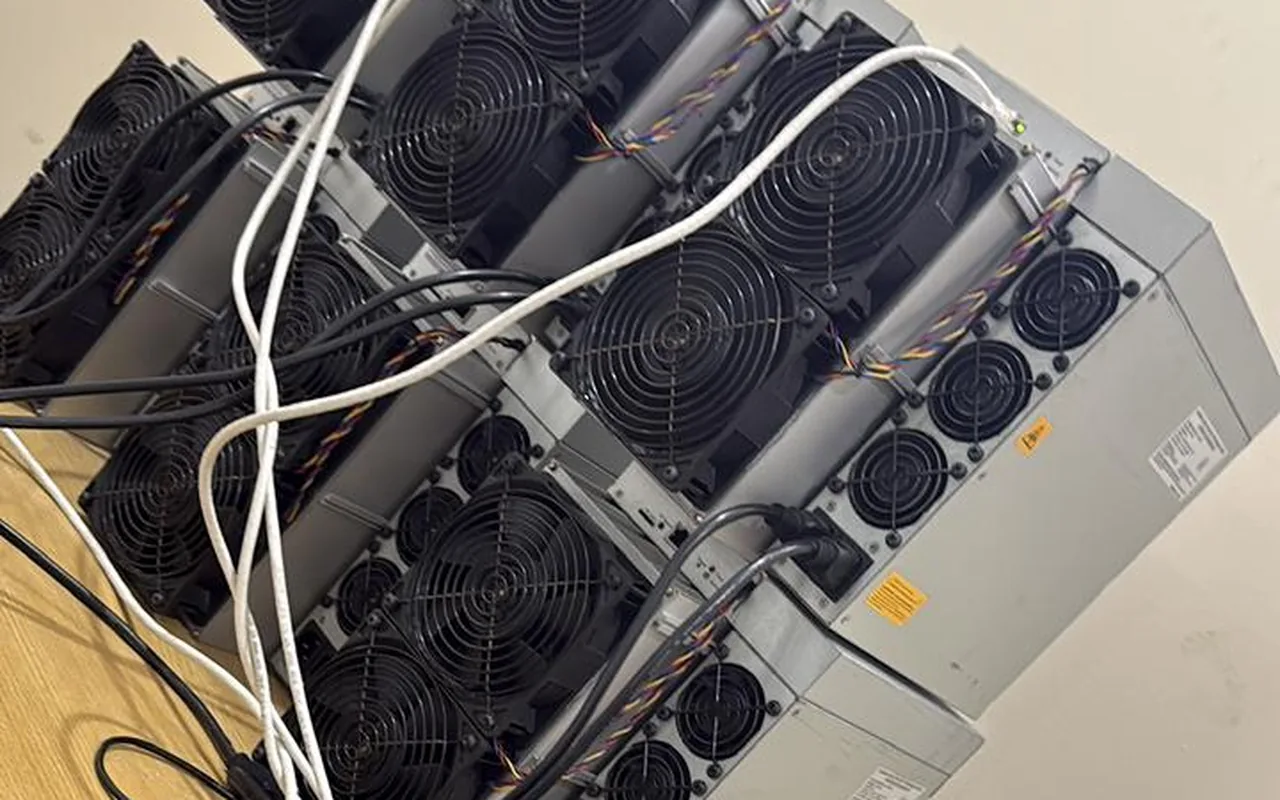
The Tariff Structure
DEWA’s residential tariff rises in slabs against monthly consumption: 23 fils/kWh for the first 2,000 kWh, then 28, then 32, reaching 38 fils/kWh above 6,000 kWh per month. The slabs apply to your whole household consumption, so a miner doesn’t get billed separately from your air conditioning.
Commercial premises pay a flat 38 fils/kWh, industrial 23 fils/kWh. On top of any of these sits the fuel surcharge, variable with fuel prices and recently around 6 fils/kWh, plus 5% VAT.
Two implications matter immediately. First, industrial power is the cheapest rate available and residential mining at scale is the most expensive, which inverts what most first-time buyers assume. Second, the slab structure means a residential miner’s marginal electricity, meaning every kWh after you cross into the upper tiers, is billed at the top rate rather than the bottom one.
The Math, and How to Run It Yourself
The formula, which works at any tariff anywhere:
Monthly kWh = (unit wattage ÷ 1,000) × 24 × 30
Monthly cost = monthly kWh × your rate per kWh
Worked with a catalog unit, the Antminer S21 Pro at 3,510 W:
(3,510 ÷ 1,000) × 24 × 30 = 2,527 kWh per month, from one machine.
That single figure is the whole argument. It exceeds the 2,000 kWh first slab by itself, before your household has run a single appliance. Add typical UAE home consumption, where air conditioning alone puts many households in the thousands of kWh through summer, and one miner pushes a normal home into the 32 and 38 fils/kWh bands.
At the top residential band, that machine’s consumption priced at 38 fils/kWh comes to roughly 2,527 × 0.38 = AED 960 per month, before the fuel surcharge and VAT. DEWA bills the residential slabs progressively, so that isn’t a literal bill line. It’s the marginal cost of consumption at the top band, which is where a miner’s kWh land once household usage fills the lower slabs. Commercial premises are different: at a flat 38 fils/kWh, that same 2,527 kWh is a literal AED 960, no slabs involved. Run the same consumption at the industrial 23 fils/kWh and it’s about AED 581, a difference of roughly AED 380 a month on one machine, purely from where the machine sits.
Substitute your own unit’s wattage and rate and the formula gives you your number. That’s the only calculation that matters, and it’s yours to run. We don’t publish profitability projections, because the honest inputs are your rate, your uptime, network difficulty, and the bitcoin price over your runtime.
Why Residential Mining Fails Economically
The slab penalty is the first reason. Mining at home doesn’t just add cost, it re-rates your existing consumption upward. The second is cooling: a machine dumping 3,500 W of heat into a UAE home in August means air conditioning working harder, which is more electricity, billed in the same upper slabs. You pay twice for the same heat.
The third reason isn’t tariff at all. Residential circuits aren’t designed for continuous industrial draw, and 75dB of fan noise in a residential building is a problem regardless of what it costs. And if mining is being run as a business from a residential premises, the connection can be reclassified commercially, at 38 fils/kWh flat.
Stack those and residential mining in the UAE fails on arithmetic before it fails on anything else.
Hosting Economics
The alternative is straightforward. You keep owning the machine, we arrange somewhere for it to run and keep it monitored, and your home electricity bill returns to being a home electricity bill.
The comparison to run is your all-in hosting cost per machine against what that machine would add to your residential bill at the upper slab rate, plus the cooling load it creates, plus the equipment risk of running industrial hardware in a space not built for it. Hosting is quoted per unit, so that comparison is a real number rather than a guess. For most UAE retail buyers that comparison isn’t close, which is why hosting is the standard path here rather than a niche one. Hosting is quoted per unit by power draw, on WhatsApp, alongside the hardware quote if you’re buying.
How the UAE Compares Regionally
Rates differ meaningfully across the region, and the honest framing is that electricity cost drives where mining makes sense more than any other factor. Saudi Arabia and Pakistan both see mining interest built on different rate structures than the UAE’s, and in Pakistan specifically the whole hardware market is shaped by it: cheap power in particular situations favours low entry cost per terahash over efficiency, which is why the used S19 family dominates that market. Our guide to ASIC miner prices in Pakistan covers it in detail.
The transferable point is not about which country is cheapest. The same machine at 23 fils/kWh and at 38 fils/kWh is two different businesses, and the formula above is how you find out which one you’re in, wherever you are.